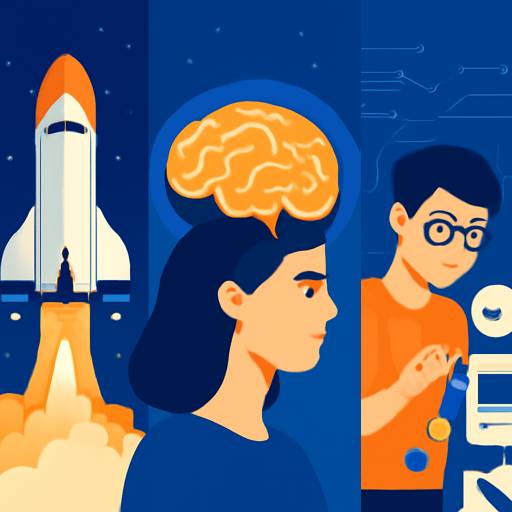
From Stars to Circuits: Inspiring Student Breakthroughs in Space, Mind, and Robotics
Ambitious learners no longer have to wait for a lab badge to explore the universe, decode human cognition, or build intelligent machines. With open data, approachable hardware, and free software, students can design original investigations that feel like real research. The following sections map out high-impact pathways across astronomy research ideas, Space Telescope Projects, cognitive science for high school experiments, and hands-on builds in humanoid robotics for students and swarming systems.
Space Telescope Projects and Data-Driven Astronomy Research Ideas
Modern astronomy thrives on data, and much of it is publicly available. Students can build compelling Space Telescope Projects by mining archives from missions such as Hubble, TESS, Gaia, and JWST. These repositories empower young researchers to analyze light curves, classify galaxies, study exoplanet transits, or track near-Earth objects, often with tools that run in a simple notebook. Using Python libraries like Lightkurve or Astroquery, learners can pull TESS observations and test hypotheses about planetary radii, orbital periods, or stellar variability. A strong entry project is to detect periodic dips in a star’s brightness—evidence of a transiting exoplanet—and then validate the signal through phase folding and noise analysis.
Another fertile track is variable star photometry. With data from ASAS-SN or AAVSO, students can compare algorithms for period detection, assess data gaps, and estimate uncertainties caused by atmospheric or instrumental effects. For enthusiasts with small backyard telescopes, measuring the brightness of Cepheids or eclipsing binaries using free software like AstroImageJ offers a tangible path from image calibration to scientific inference. Pairing observational campaigns with catalog cross-matches (SIMBAD, VizieR) helps connect an object’s behavior to its physical properties.
Students interested in cosmology can practice galaxy classification and redshift estimation using Sloan Digital Sky Survey images. Techniques range from visual morphology checks to machine learning classifiers that separate stars from galaxies or identify barred spirals. A small convolutional neural network trained on SDSS thumbnails provides a gateway into astro-ML, with opportunities to discuss class imbalance and validation splits. For those drawn to planetary defense, projects combining Minor Planet Center ephemerides and photometric time series can estimate asteroid rotation periods and shapes. Even environmental impacts make excellent astronomy research ideas: mapping light pollution with standardized sky quality measurements, analyzing satellite streak prevalence in long-exposure images, or modeling signal contamination in future surveys. Each of these pathways cultivates skills in uncertainty quantification, model comparison, and transparent reporting—all hallmarks of professional astrophysics.
Cognitive Science for High School: Experiments, Ethics, and Interfaces
Rigorous cognitive science for high school projects hinge on solid design, ethical care, and reproducible analysis. Classic paradigms—Stroop interference, attentional blink, mental rotation, and working memory span—remain powerful because they are easy to implement and reveal robust effects. With free tools like PsychoPy or jsPsych, students can deploy tasks on laptops or the web, randomize conditions, and capture millisecond timing. A well-scoped study could investigate how sleep, practice, or distraction influences reaction times and accuracy, preregister hypotheses on the Open Science Framework, and compute effect sizes to interpret outcomes beyond simple p-values.
Human–computer interaction opens broader doors. Students can compare user performance on alternative interface layouts, test the cognitive load of multimodal prompts, or analyze how feedback type affects error correction. Eye-tracking approximations from webcams (with caveats) or simple keystroke dynamics can supply behavioral telemetry without specialized gear. If participants are involved, informed assent, minimal risk, privacy protection, and debriefing are essential; anonymized datasets and simulated agents are valuable fallbacks when working under stricter oversight.
Bridging psychology and AI makes for timely research. Learners might evaluate how different prompt structures alter reasoning quality in language-based tutoring systems, or how explanation style shapes trust and calibration in decision support. These inquiries can leverage open corpora for text analysis or small user studies to assess comprehension and satisfaction. Another avenue explores perceptual illusions to illustrate predictive coding: students could measure susceptibility differences under time pressure, or contrast results across modalities (visual vs. auditory). Statistical rigor matters: counterbalance condition order, control for practice effects, and report confidence intervals. Even spreadsheet-based workflows can be robust if students document data cleaning, preregister analytic plans, and release de-identified results. By combining experimental care with reflective ethics, high school researchers learn not only how minds process information, but how scientists responsibly steward participant well-being and interpret evidence.
Humanoid and Swarm Robotics for Students: Modular Builds, Control, and Real-World Tasks
Robotics transforms abstract algorithms into tangible behavior, and two especially vivid domains are humanoid robotics for students and multi-agent swarms. Humanoids invite questions about balance, dexterity, and human–robot interaction, while swarms highlight distributed decision-making and robustness. For humanoids, students can start with a 12–18 degree-of-freedom kit using hobby servos, an IMU for orientation, and a microcontroller or single-board computer running a lightweight control loop. Standing balance demonstrates closed-loop control with PID or LQR, while basic locomotion introduces gait generation, center-of-mass projection, and foot trajectory planning. Inverse kinematics libraries and simple state machines can yield impressive motions, from squats to cautious stepping on uneven foam.
On the software side, simulation-first is prudent. Gazebo, Webots, or PyBullet allow rapid iteration on gait parameters and fall recovery without risking hardware damage. Students can compare open-loop, trajectory-tracking, and reinforcement learning controllers, discussing sim-to-real transfer and domain randomization. Adding perception—AprilTag-based localization, ultrasonic or time-of-flight sensors—enables tasks like bin picking or hallway navigation with visual servoing. Safety practices matter: mechanical stops, current limits, and tethered experiments reduce risk while students iterate on motion plans and controllers.
Swarm systems reward minimal, repeatable designs. A microcontroller, differential drive, and low-cost radios (BLE or Zigbee) suffice for coordination protocols such as consensus, leader election, and flocking. Landmark algorithms like Reynolds’ rules for cohesion–alignment–separation, coverage with potential fields, and formation control via distributed graph Laplacians translate beautifully into classroom experiments with 5–20 units. To ground theory, students can replicate elements of well-known platforms like Harvard’s Kilobots—uniform hardware, restricted communication, and simple local rules—and then test resilience to packet loss or sensor noise. For practical deployments, simulation of 50–200 agents clarifies scalability; later, a subset can be realized with real robots to validate hypotheses under friction, latency, and battery constraints. For students seeking curated pathways and community, Swarm robotics student projects offer structured challenges that blend algorithm design, prototyping, and field testing.
Compelling case studies include warehouse-inspired formation reconfiguration, agricultural monitoring with cooperative coverage, and emergency response tasks like distributed beacon localization. Assessment can incorporate metrics such as time-to-coverage, collision rate, energy consumption, and communication overhead. Integrating ROS 2 for message passing, or lightweight custom protocols, exposes students to professional workflows. Bringing the humanoid and swarm threads together, learners can prototype heterogeneous teams: a humanoid performing dexterous manipulation while a swarm scouts terrain and relays information, illustrating how system-level thinking turns individual robots into a coordinated, mission-ready ensemble.